Few wine regions are as misunderstood as the Vinho Verde Region. In this article, we aim to clarify some of the myths that remain about Vinho Verde Region, simply and straightforwardly.
Is Vinho Verde made from green grapes, i.e., grapes that have not fully ripened?
Wines produced in the Entre-Douro-e-Minho region have distinct characteristics from those of other regions, primarily due to their marked acidity, but also their fresh, aromatic, and fruity profile. Perhaps this is why a distinction was made between “green” and “ripe” wines, as if to indicate that the former were made from green grapes and the latter from ripe grapes. However, none of this is true today, since only ripe grapes, with complete phenolic ripeness, allow the production of good wine. While technological ripeness indicates when the grape has the ideal level of sugar and acidity for harvesting, phenolic ripeness is more complex and measures the evolution of tannins, anthocyanins (responsible for color) and other compounds present in the skin, seeds, and stems of the grape. This maturation defines the structure of the wine, the intensity of the color, the texture, and the complexity in the mouth. Harvesting at the ideal point of phenolic maturation is what guarantees more balanced, elegant, and complex wines. Thus, the separation between ‘green and ripe’ ends up being incorrect and inaccurate, given that phenolic ripeness can be complete in grapes with a lower alcohol content, which means that the grapes are already ripe and at the optimum point for harvesting.
Instead of asking us, as so often happens, whether we want to accompany our meal with a green or a mature wine, we should be asked whether we want a wine from the Vinho Verde Region, Dão, Bairrada, etc.
Wines from Vinho Verde are all white?
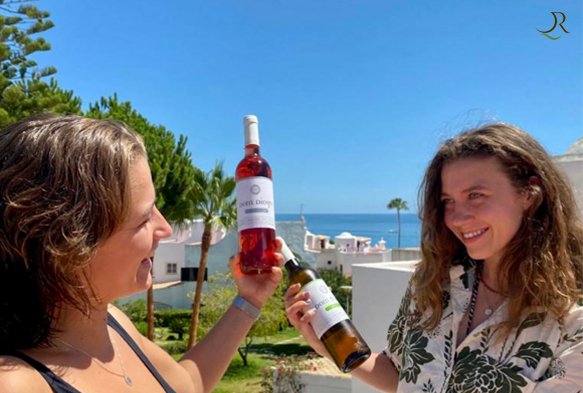
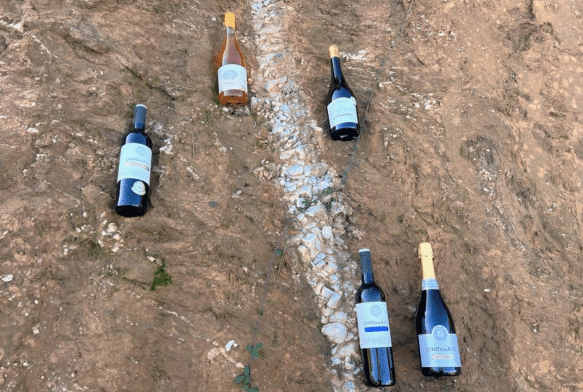
Some tourists visiting Quinta da Raza, particularly from abroad, are sometimes quite surprised to find red wines in our wine shop, such as Dom Diogo Vinhão, Raza Tinto, Raza Lagares, or Quinta da Raza Vinha de Cerdeiredo. This is not surprising, since in their respective countries of origin, the Vinho Verde wines that these people find in wine cellars, wine shops, or large retailers are mainly white and, less frequently, rosé. Although the region currently accounts for the lion’s share of white wine production (around 80%), this reality is only 30 years old, since it was only at the end of the first half of the 1990s that red wines, which had been predominant until then, began to be overtaken by whites. Since then, support for viticulture and the modernization of vineyards, the gradual introduction of more and better technology in wineries, particularly in terms of refrigeration, and market trends have led to exponential growth in white wine production.
Thus, although whites currently predominate, the production of rosés is increasingly significant.
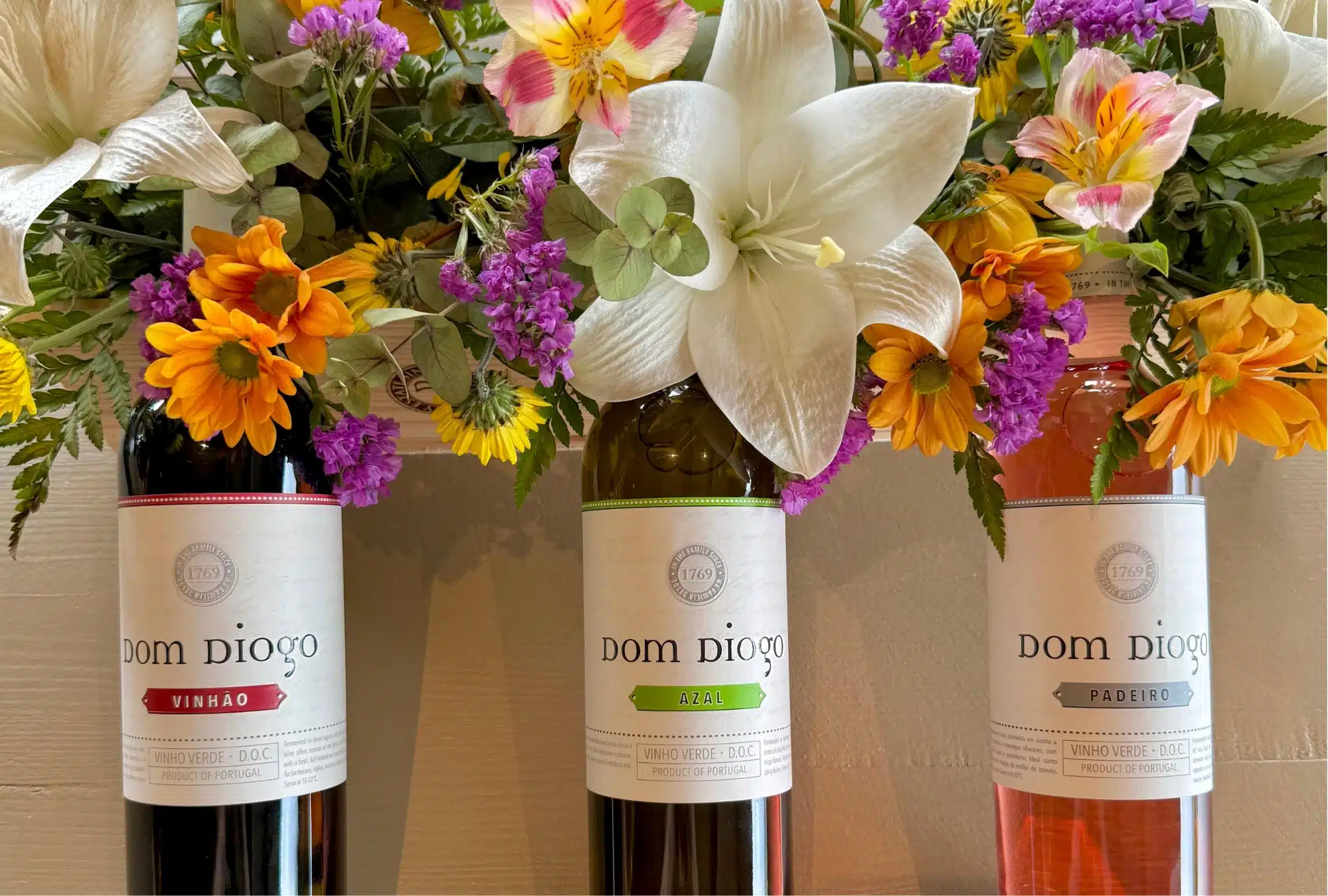
And, by the way, anyone who has never tasted a red Vinho Verde is missing out on a unique experience! How about starting or finishing, as you wish, with a Dom Diogo Vinhão?
Should Vinho Verde be consumed 'young'?
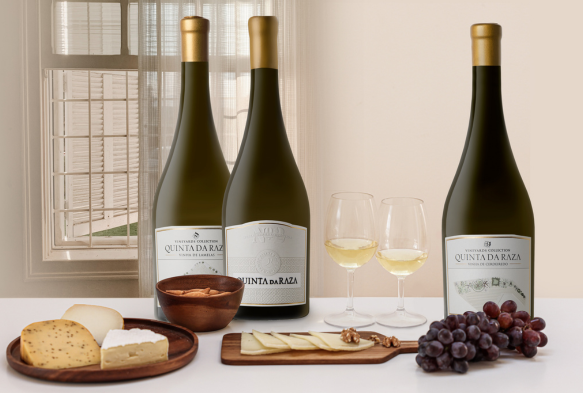
As we've just mentioned, in times gone by, the region was known for producing red wines. The taste of the time, which was more inclined towards reds, the greater technical knowledge required to produce white wines, and the fact that they were more susceptible to oxidation, meant that consumers traditionally preferred 'new' wines, which had to be drunk in a short space of time. In fact, this trend still continues today; it is common for our esteemed customers to ask us shortly after the harvest if we have Dom Diogo Azal, Dom Diogo Arinto or Dom Diogo Padeiro yet. Dom Diogo Padeiro 'new'! However, the care with which wines are made nowadays means that even those with a more fruity profile keep their qualities intact for a few years. On the other hand, it is becoming increasingly common to deliberately produce long-lasting Vinhos Verdes, which evolve wonderfully in the bottle and reach their full potential 5, 6 or 7 years after the year they were harvested. These are long-lasting wines of great complexity, structure and minerality, sometimes aged in wood. At Quinta da Raza, our Quinta da Raza Avesso-Alvarinho, o Quinta da Raza Vinha de Lamelasand Quinta da Raza Family Collection Nº3 fit this definition like a glove. In essence, the Vinho Verde Region is demonstrating that it is in a position to compete with any other wine region in producing wines of excellence, refusing to be confined to a certain profile.
Share this article