The name given to our wine region – Vinhos Verdes – often leads to confusion and misunderstandings. Actually, there are still those who think that the term ‘Vinho Verde’ is due to a style or type of wine, or even to its color.
The ‘Vinhos Verdes’, as it should be said, correspond to a Demarcated Region, established during the time of the monarchy, more specifically during the reign of King Carlos. Article 10 of the Letter of Law of September 18, 1908 and, later, Article 19 of the Decree of October 1 of the same year, determined, with strictly defined geographical limits, the creation and awarding of demarcation of some wine-growing regions in our country, including Vinhos Verdes. The first division of the region comprised five subdivisions; years later, in 1926, the number of sub-regions rose to six, with the addition of Penafiel. There are currently 9, namely: Amarante, Ave, Baião, Basto, Cávado, Lima, Monção, Paiva and Sousa.

Thus, the designation 'Verdes' comes from the fact that, whatever the season, the region is always green, with lush and exuberant vegetation, and more! We'll come back to this in a future article.
ts geographical boundaries include, to the north, the River Minho, the border between Portugal and Galicia (Spain); to the south, the River Douro and the Freita, Arada and Montemuro mountains; to the east, the Peneda, Gerês, Cabreira and Marão mountain ranges and, finally, to the west, the Atlantic Ocean. It has around 16,000 hectares of vineyards and just as many winegrowers. There are 47 grape varieties authorized for the production of Vinho Verde and 67 for the production of Vinho Regional Minho. Vinho Verde is often associated with Minho, but this agreement is only partial, since the wine region covers a much larger area, extending as far south as the River Douro.
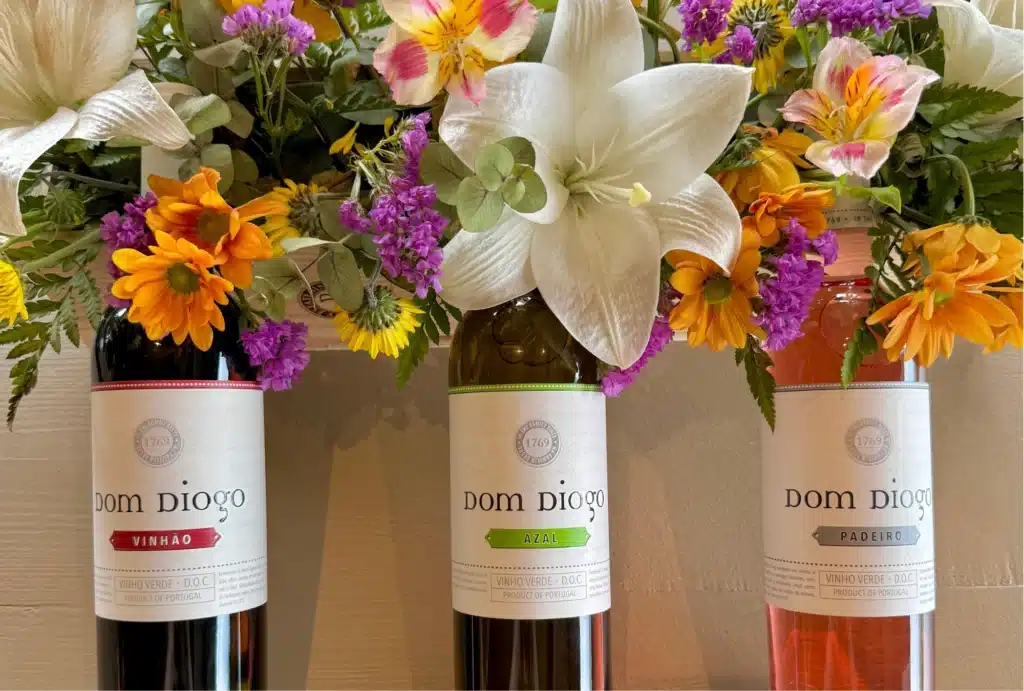
The sub-region of Basto has been present since the first demarcation in 1908. It has a particularity that distinguishes it from the others: it is made up of four municipalities, two of which – Cabeceiras de Basto and Celorico de Basto – belong to the district of Braga and, consequently, to Minho, and the other two – Mondim de Basto and Ribeira de Pena – belong to the district of Vila Real and to Trás-os-Montes. It is the sub-region furthest from the coast, which, along with the fact that it is surrounded by mountains, protects it from most of the sea winds. It is known for its harsh climate, cold and rainy in winter and dry and hot in summer, with thermometers reaching thirty or even forty degrees Celsius. For this reason, it is the ideal sub-region for the so-called late-ripening grape varieties, such as Azal and Vinhão. These, together with Padeiro, complete the triad of Basto’s indigenous grape varieties, which we promote through our Dom Diogo range, in the references Dom Diogo Azal, Dom Diogo Padeiro and Dom Diogo Vinhão.
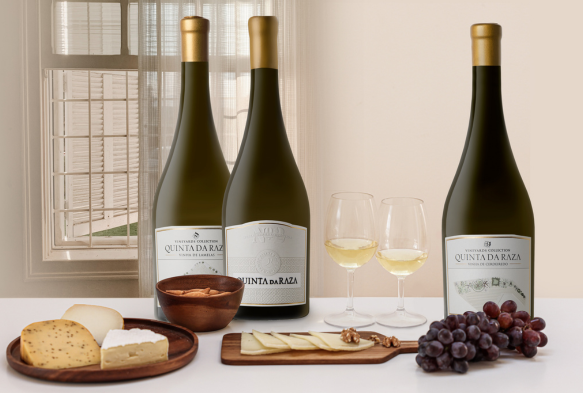
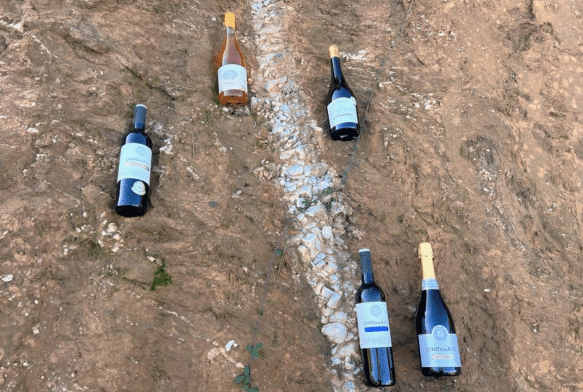
The average altitude of the region is around 200 meters, where the summit of Monte Farinha stands out, with its 937 meters of maximum altitude, topped by the mythical Nossa Senhora da Graça Sanctuary. Despite the fact that, like the rest of the region, the soils are mostly granite, Quinta da Raza’s vineyards are dominated by schist and clay areas, with some quartz veins, which contribute greatly to the liveliness, freshness and minerality of the wines we produce here.
If you’re planning your summer vacation or a weekend getaway, why not consider a visit to our region? Here you’ll find a little piece of paradise, with enchanting scenery and landscapes and wonderful corners of the Marão and Alvão mountains, with plenty of trails, waterfalls and river beaches; there’s also no shortage of ancient monuments, such as churches, bridges and castles that date back to the foundation of Portugal. Don’t forget to include Quinta da Raza in your planning; come and visit our wine store or book a wine tourism experience. There are so many and so different! I’m sure you’ll find something to your liking. Don’t put it off any longer and come and visit us! We’re waiting for you!
Share this article