The Quinta da Raza family has grown since last year. It was in February 2025 that our new vineyard, named Vinha dos Barros, took its first steps. It covers 4.5 ha and is planted with our most iconic grape variety—and, why not admit it, our favorite: the Azal.
Located very close to our winery, the Vinha dos Barros vineyard is, administratively speaking, in the parish of Canedo de Basto, adjacent to the Vinha da Bouça Fria, where the Padeiro and the Espadeirogrow. With an average altitude of 250 meters, the new vineyard, situated on a plateau, faces south (which promotes grape ripening due to greater sunlight exposure) and slopes gently toward the east.
Planting a vineyard and harvesting the first grapes—as some of you may know—is a time-consuming process that requires patience and dedication, so we’ll have to wait until 2028 for the first grapes and the first wines from Azal da Vinha dos Barros.
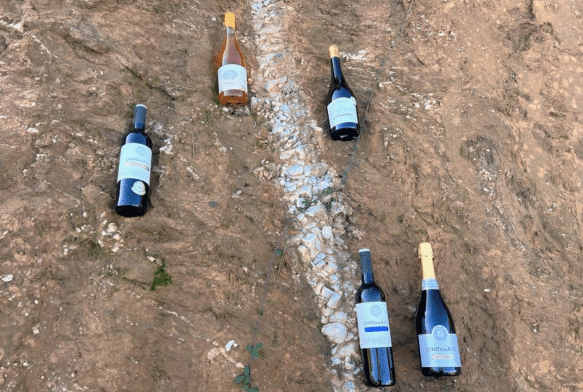
The name “Barros” may stem from the fact that the granite-based soil contains some clay or, as is sometimes said, is somewhat “muddy.” To these two components— granite and clay —we can add a third: specifically, schist. In fact, these elements—clay and granite—ultimately serve as distinguishing features in a region where granite is so often nearly ubiquitous.
And why, you might ask, are we so committed to the Azal grape variety? Well, first of all, because it is a native variety of Basto, and it is here in our subregion that the ideal conditions—in terms of soil, but above all climate—are found for it to express its full potential and quality. In fact, we cannot—and should not—deny our history and the fundamental role that Quinta da Raza played in popularizing the Azal grape variety; after all, it was here that one of the first single-varietal wines made from this variety originated. Nevertheless, there remains a certain “marginalization”—or, if you prefer, a lack of awareness—on the part of the public regarding this grape, which has not yet achieved the same level of recognition as others, partly, no doubt, because it is recommended in only three of the nine subregions: Basto, Amarante, and Penafiel. Last but not least is the fact that, according to what has been determined, the Azal grape variety demonstrates excellent adaptability to climate change.

Indeed, there can be no doubt that climate change is the greatest and most daunting challenge that winemakers will have to face in the coming years. At Quinta da Raza, we are well aware of this reality; otherwise, we would not have played a pioneering role within the Vinho Verde region in adopting sustainable practices, as evidenced by our Sustainable Winegrowing Portugalcertification, obtained in 2023 and since renewed for the years ahead.
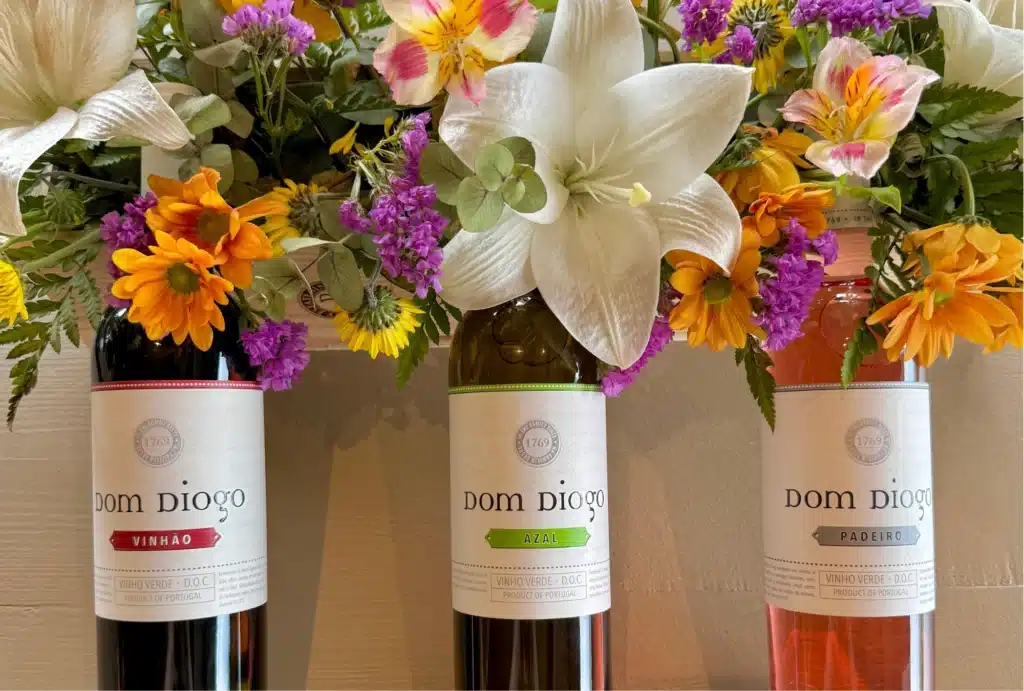
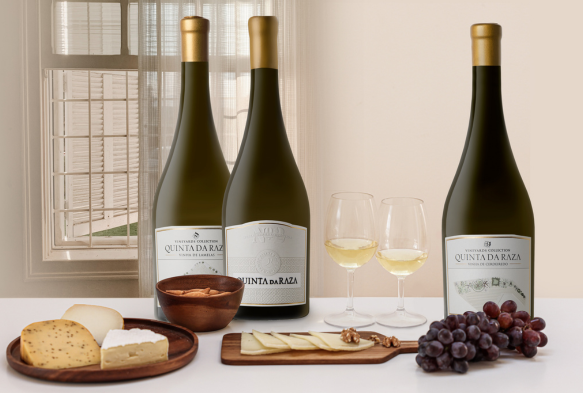
If this introduction to the new Vinha dos Barros has made you want to rediscover the Azal grape variety—or, if you haven’t tried it yet—don’t despair! You don’t have to wait for the first grapes from Vinha de Barros! Currently, there are three wines in our portfolio that will allow you to become familiar with this truly unique grape:
How about a toast with Azal?
Share this article